Swap Ethereum To Arbitrum: A Wallet Holder’s Guide
Swap Ethereum To Arbitrum: A Wallet Holder’s Guide
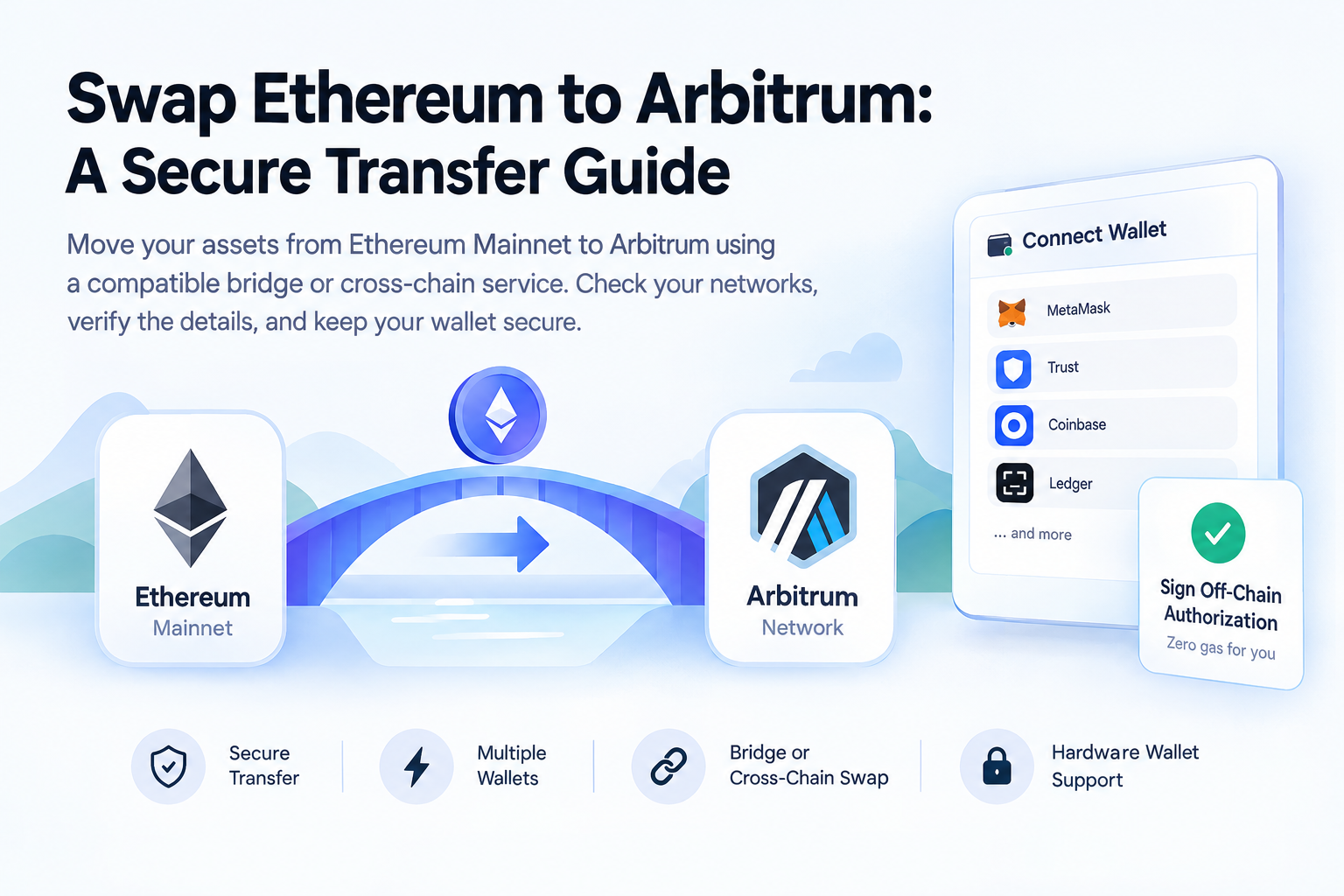
To Swap Ethereum To Arbitrum, use a compatible bridge or cross-chain swap service that supports your asset and both networks. Check the destination, token, transaction details, and displayed fees before confirming. Onchain offers a Permit2-based authorization flow, but you should verify current route availability before using it. Try Onchain at onchaindiagnois.com.
Swap Ethereum To Arbitrum: What You Need to Know
Ethereum Mainnet and Arbitrum are separate networks. ETH held on Ethereum Mainnet is not automatically available for spending on Arbitrum. To move assets between them, you need a supported bridge or cross-chain service that can deliver assets to the intended destination.
When you Bridge Ethereum to Arbitrum, check the source network, destination network, token, estimated output, and any displayed fees. A bridge generally transfers assets between networks. A cross-chain swap may also exchange one asset for another. The exact process depends on the service and route.
Onchain is a web dApp on Ethereum Mainnet. Users connect a wallet, approve Permit2, a Uniswap contract, and sign an off-chain authorization to move tokens. The user pays zero gas for this signing step; the server wallet pays gas. This does not establish that every Arbitrum route is available or that every transaction associated with a bridge is free. Check the official Onchain page for current details.
|
Option |
Main purpose |
What to verify |
|
Official Arbitrum bridge |
Transfer supported assets to Arbitrum |
Supported tokens, destination, and instructions |
|
Third-party bridge |
Move assets between supported networks |
Service legitimacy, contract details, and fees |
|
Cross-chain swap |
Transfer assets and potentially exchange tokens |
Expected output, token selection, and route |
|
Onchain Permit2 authorization |
Authorize supported token movements using an off-chain signature |
Requested permissions and current route availability |
For background, read Ethereum.org's Layer 2 guide and the Uniswap Permit2 documentation. These resources explain Layer 2 networks and the authorization system.
Step-by-Step: How to Swap Ethereum To Arbitrum
- Check the available route. Visit the Onchain swap interface and review its currently supported assets and networks. Confirm that your intended source asset and Arbitrum destination are available before connecting or approving anything.
- Connect a supported wallet. Onchain lists wallets including MetaMask, Trust, Coinbase, Phantom, Rabby, SafePal, OKX, Rainbow, and others. Hardware wallet users should select a supported connection method and retain control of their signing device.
- Verify the network and token. Confirm that your wallet is using the intended source network and that the selected token matches your plan. Do not assume that selecting ETH automatically selects the correct network or destination.
- Review Permit2 approval details. If the Onchain flow requests Permit2 approval, check the contract address and the permissions being requested. The official Permit2 address supplied by Onchain is 0x000000000022D473030F116dDEE9F6B43aC78BA3.
- Read the off-chain signature request. Review the authorization before signing. Onchain users pay zero gas for this signing step because the server wallet pays gas. However, a signature can still grant permissions, so do not sign an unclear or unexpected request.
- Review the transaction details. If a supported cross-chain route is available, verify the source network, Arbitrum destination, token, expected output, and displayed fees. If the route is missing, do not assume that a similar-looking option will produce the same result.
- Check the result. Follow the service's instructions and verify the transaction status. Check your wallet on Arbitrum for the expected asset. If the transfer is delayed, review the transaction status before attempting another transfer.
Common Issues and How to Fix Them
- ETH is missing from Arbitrum: Check the transaction status and confirm that your wallet is displaying the Arbitrum network.
- Arbitrum is not listed as a destination: Check the service's current network support before proceeding; do not assume the route is available.
- Your wallet will not connect: Confirm that you selected a supported wallet, unlocked it, and followed its connection prompts.
- Permit2 approval fails: Recheck the network, contract address, and requested token permissions before retrying.
- You receive an unexpected signature request: Reject it if the purpose or permissions are unclear, and contact support through a verified channel.
- The transfer remains pending: Check the transaction status and follow the service's instructions before submitting another transaction.
When troubleshooting, keep the source network, destination network, token, and public transaction hash available. Never share your recovery phrase or private key to prove ownership or obtain help.
How to Contact Onchain Support Safely
Onchain does not offer phone support. Its listed support channels are the in-app chat and Telegram group.
- In-app chat: Visit Onchain's official website and open the chat in the bottom-right corner.
- Telegram group: Use the Telegram link provided through Onchain's official website to help confirm that you have reached the intended community.
- Avoid fake support accounts: Ignore requests to reveal wallet recovery information, install unfamiliar software, or sign unexplained transactions.
Onchain staff will never ask for your seed phrase, private key, or 2FA code.
If you report a failed transaction, provide non-sensitive details such as your wallet type, network, error message, and public transaction hash. Never share secret credentials, even if someone claims they need them to recover your assets.
Frequently Asked Questions
How do I swap ETH from Ethereum to Arbitrum?
Use a bridge or cross-chain swap service that supports Ethereum Mainnet and Arbitrum. Connect your wallet, select the supported asset and destination, and review the displayed fees and expected output. Follow the service's instructions, then verify that the asset arrived on Arbitrum before using it.
What is the difference between an Ethereum to Arbitrum bridge and a swap?
A bridge moves supported assets between blockchain networks, while a swap exchanges one asset for another. Some services combine both actions in one workflow. Before confirming, review the token, destination network, quoted output, and transaction costs to understand exactly what the service will do.
Can I transfer ETH to the Arbitrum network with a hardware wallet?
Yes, if your hardware wallet works with a compatible wallet connection and a supported transfer route. Onchain supports Ledger through MetaMask, Trezor through Rabby, and Tangem and Safe through WalletConnect. Review the transaction and signature details on your device before approving any request.
Does Onchain charge gas for signing a Permit2 authorization?
Users pay zero gas for signing an Onchain off-chain authorization. The server wallet pays gas for this process. This statement applies to the signing step, not necessarily to every blockchain transaction or third-party bridge action. Check the displayed terms for the specific route you intend to use.
What should I do if my Ethereum-to-Arbitrum transfer fails?
Check the transaction status, selected networks, destination address, and service instructions before retrying. If you used Onchain, contact its in-app chat or verified Telegram group. You can provide a public transaction hash for troubleshooting, but never share your recovery phrase or private key.
Related Resources
- Onchain home page — learn about the dApp and its authorization flow.
- Onchain handbook — explore additional educational resources.
- Uniswap Permit2 documentation — understand the token authorization system.
- Ethereum.org Layer 2 guide — learn about Ethereum scaling networks.
Key Takeaway Box
To Swap Ethereum To Arbitrum, choose a compatible bridge or cross-chain swap service, confirm the destination network, and review every requested permission before signing. Onchain uses Permit2-based off-chain authorization, and users pay zero gas for signing because the server wallet pays gas for this step. Check current route availability and try Onchain at onchaindiagnois.com.
Ready to try Onchain?
Visit Onchain to explore its authorization flow and supported wallet options.
You can also open the Onchain swap interface to check the currently available options before proceeding.
Comments
Post a Comment